
Hopes for India's AI Summit
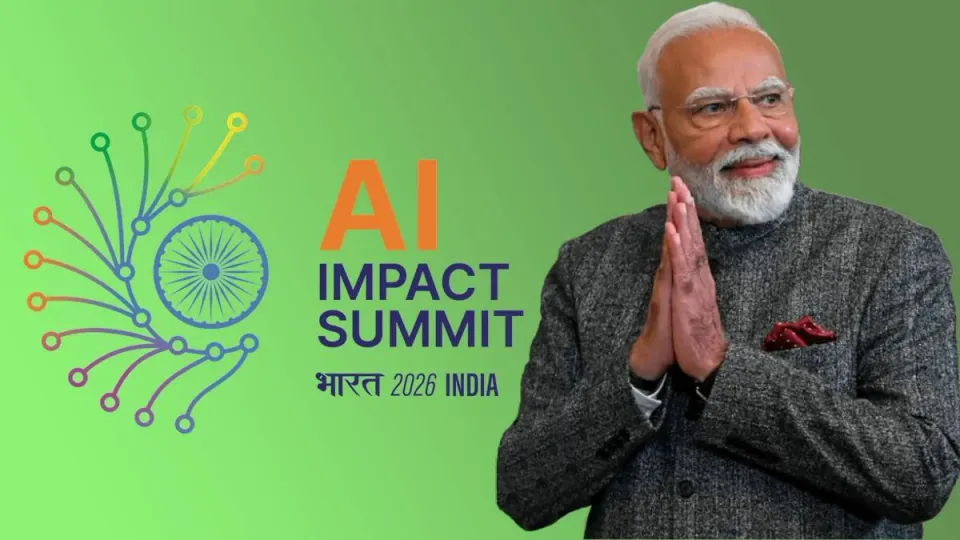
Six months ago, a small group of us gathered in a dimly-lit conference room in the Ministry of Electronics and IT to brainstorm on the India AI summit. Since then, I haven’t gone a single day without thinking about its import and relevance.
Now, with less than a month to go, I find that my hopes and expectations are anchored in three main issues.
- ACCESS
The India AI summit will have to engage with difficult questions around equity and access. Everyone agrees that there is a serious risk of concentration, and that developing countries need better access to foundational infrastructure to reap the benefits of AI. But how do we make shared compute clusters work in a technical sense? What market incentives will drive voluntary data sharing? Even assuming we ensure priority access to compute, how will we address thorny governance issues around control and supervision in the context of national sovereignty?
Moreover, the current focus is entirely on democratising access to data and compute. But if large parts of the world still struggle with basic digital connectivity, can we really hope for an equitable society transformed by AI?
Finally, I worry that the concept of ‘AI diffusion’ is being used as a geopolitical tool by some countries to assert dominance and create new dependencies. This is at odds with the needs of the Global South, where AI diffusion is meant for inclusive development. Can we bridge these two seemingly contradictory objectives?
The India summit presents a unique opportunity here: for countries to build thoughtful coalitions around developmental needs, to design for decentralisation and break down dependencies, and to ensure that the Global South isn't just present at the table, but has an equal say in deciding what's on the menu.
- IMPACT
Given the summit's singular focus on impact, success comes down to just one question: Are AI deployments having a tangible impact on the lives of people and organisations that are using it?
We will need to showcase applications that have utility and scale in the real world, identify metrics to evaluate social and economic impact, and reward those people that are focusing on value creation instead of technology bragging rights.
Demonstrating real impact may also help quiet the 'hype cycle' critiques and, to some extent, justify the billions flowing into AI infrastructure (whether we are prepared for the harsh environmental impact of all this is a separate and equally important question).
The impact question is personally important to me too. I describes myself as a ‘techno-realist’, and I will be using this summit as a test: Where the India summit demonstrates real impact, I will stand convinced about the transformative potential of AI. Where it fails, I will gladly concede that we are still in the ‘promise’ stage of the supposed AI revolution, and adjust my beliefs accordingly.
- TRUST
Many people seem to think that India’s AI summit is about impact, not safety. This is sometimes explained away dismissively as a natural progression of the AI summit series from the inaugural safety-focussed summit organised by the UK at Bletchley Park in 2023, to something more real and present in 2026.
I think this is poor positioning and a missed opportunity for India. As Prime Minister Modi rightly put it in Paris last year, we need to build "people-centric” applications and make “collective global efforts to establish governance and standards, that uphold our shared values, address risks, and build trust”.
To be clear, we don’t have to choose between safety and impact. In fact, they go hand in hand. AI safety is not just about existential risk. It is about trust and transparency, accessibility, reliability, agency and human empowerment. If AI is by, for and of humans, then trust is the central pillar — and any summit that neglects this will be building on a weak foundation.
For the India summit this means three things: (1) companies need to make real commitments on privacy, child safety, sustainability, and transparency on labour impacts to build trust; (2) we need to democratise access to safe and trusted AI through open-source tools, benchmarks and standards; and (3) governments should agree on AI governance norms that put human flourishing front and centre.
These are my hopes for the India AI summit. For now, I remain cautiously optimistic.